


Online communities are quickly becoming one of the most powerful growth engines for modern small businesses. Instead of relying entirely on social media algorithms, companies are creating dedicated digital spaces where customers can interact, learn, and build relationships directly with the brand.
A well-built community increases customer engagement, brand loyalty, long-term retention, and organic word-of-mouth marketing. However, building a thriving community requires the right strategy and the right platform.
This guide will walk you through everything you need to know about building and growing an online community — and how platforms like ZenCommunity help businesses create fully owned communities directly on their websites.
What Is an Online Community?
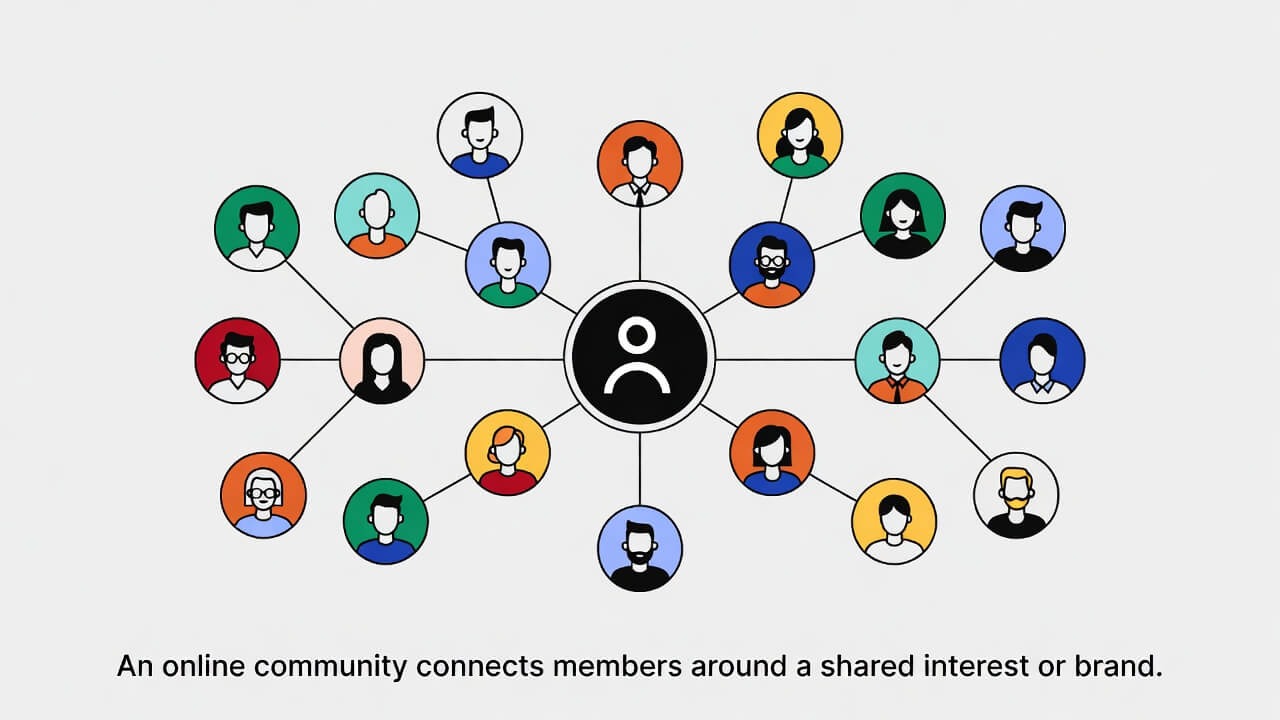
An online community is a digital space where people interact around shared interests, goals, or brands. Members can ask questions, share knowledge, discuss ideas, and collaborate with others. For businesses, communities become a hub where customers and supporters gather around the brand.
Platforms like ZenCommunity allow businesses to host these communities directly on their own websites, giving them full control over branding, content, and data. This ownership is crucial—when you build on someone else’s platform, you’re renting space. You are creating an asset when you work on your own website.
A Brief History of Online Communities
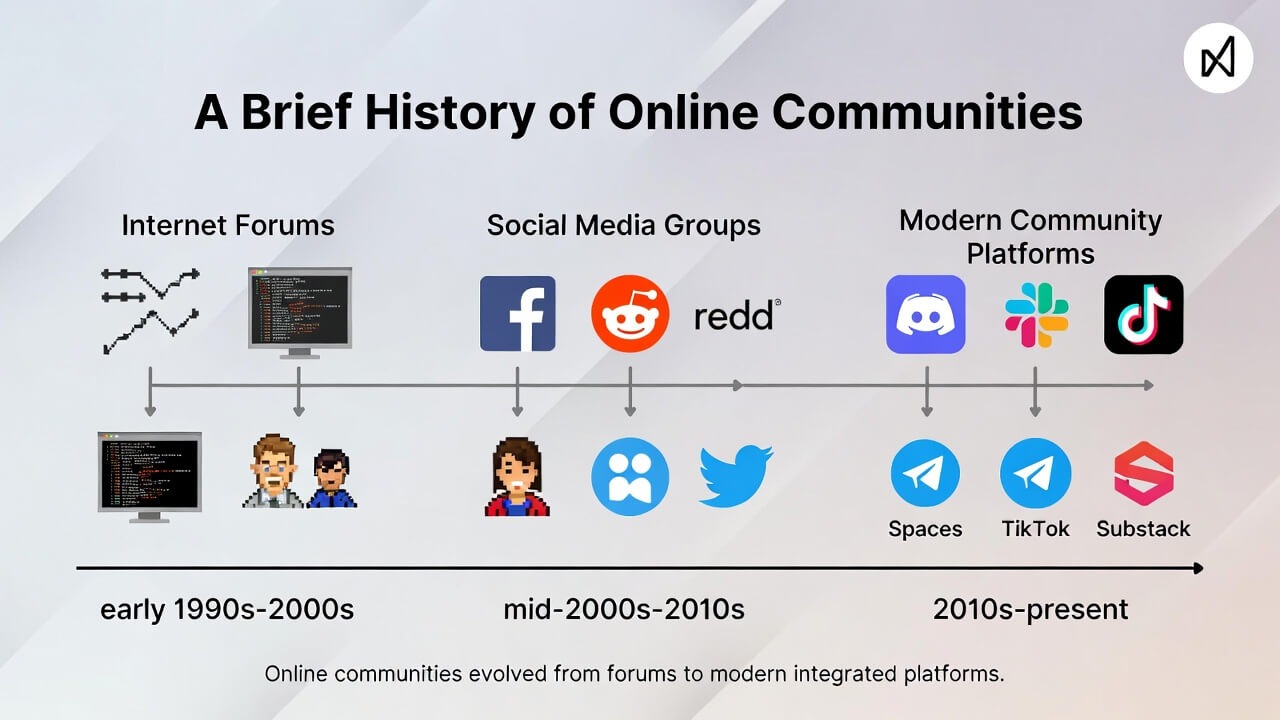
Online communities have evolved significantly over the years.
Early Internet Forums
The earliest communities were simple discussion boards where users posted questions and responses. Think of the early days of bulletin board systems (BBS) and forums like phpBB—text-heavy, slow, but revolutionary for their time.
Social Media Communities
Platforms like Facebook Groups and Reddit made communities more accessible to the masses. Suddenly, anyone could create a group and gather like-minded people. But this convenience came with a major problem: businesses do not own the audience. You’re renting space in someone else’s platform, subject to their algorithm changes, advertising, and rules.
Modern Community Platforms
Today, many businesses prefer private community platforms that integrate directly with their websites. This shift represents a return to ownership—businesses want to control their destiny. Solutions such as ZenCommunity combine social feeds, chat systems, and discussion spaces inside a WordPress environment, allowing businesses to build communities they truly own.
Why Online Communities Matter for Small Businesses
Small businesses often struggle with expensive advertising, low customer retention, and limited brand visibility. A well-built online community solves these problems.
Direct Connection with Customers
Communities allow businesses to communicate directly with their audience without relying on social media algorithms. When you post an update in your community, every member sees it. You’re not fighting for attention in a crowded newsfeed.
Community-Driven Marketing
Members become brand ambassadors who spread the word about your goods and services organically. Happy customers tend to recommend brands they trust, and a community creates a natural space where those recommendations can spread.
Stronger Brand Relationships
Customers get greater trust and loyalty when they engage with a community regularly. They’re not just buying from you; they’re part of something bigger.
With tools like ZenCommunity, businesses can host these conversations directly on their website rather than sending customers to external platforms where distractions and competitors are just one click away.
Types of Online Communities
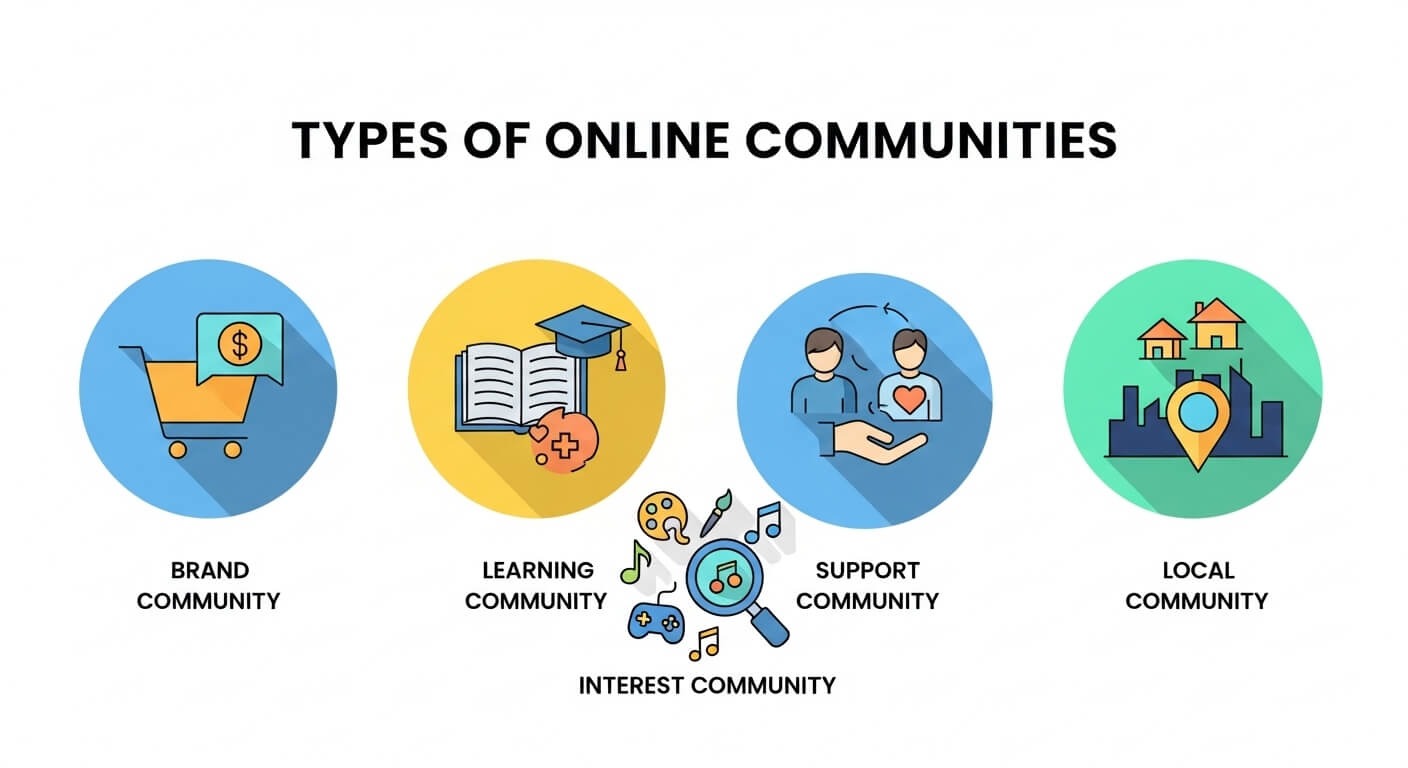
Different types of communities serve different goals. Understanding these categories helps you choose the right approach for your business.
Interest-Based Communities
Built around hobbies or shared passions. A local bookstore might create a community for sci-fi readers.
Brand Communities
Focused on a company, product, or service. Think of Harley-Davidson’s H.O.G. or Sephora’s Beauty Insider community. Members join because they love the brand and want to connect with others who feel the same.
Learning Communities
Members gather to share knowledge and educational resources. A software company might create a community where users teach each other how to use their product more effectively.
Support Communities
Customers help each other solve problems and share solutions. These communities reduce support tickets while building a knowledge base that benefits everyone.
Local and Nonprofit Communities
Groups focused on geographic regions or social causes. A local coffee shop might foster a sense of community for neighborhood residents.
Platforms like ZenCommunity are particularly effective for brand and support communities, especially when businesses want to keep conversations seamlessly integrated with their own website.
Benefits of Building an Online Community
Building a community provides multiple long-term benefits for businesses.
Stronger Customer Engagement and Loyalty
Active communities create deeper emotional connections with customers. When people invest time in your community, they’re investing in your brand.
Improved Customer Support
Members often help each other solve issues, reducing support workload. It’s like having an army of volunteer support agents who know your product inside and out.
Valuable Customer Insights
Community discussions reveal customer needs, product feedback, and market trends. This intelligence is gold for product development and marketing.
Increased Brand Awareness
Communities naturally generate user-generated content that spreads across the web. Members share discussions and recommend your brand to friends.
Higher Sales and Revenue
Engaged communities often convert into loyal customers. Research shows community members purchase more frequently, spend more per transaction, and remain customers longer.
Peer-to-Peer Education
Members share tips and knowledge, making your product more valuable to everyone. New users learn from experienced ones, reducing the learning curve.
Creation of Brand Advocates
The most engaged members become ambassadors who defend you online and provide social proof that influences others to buy.
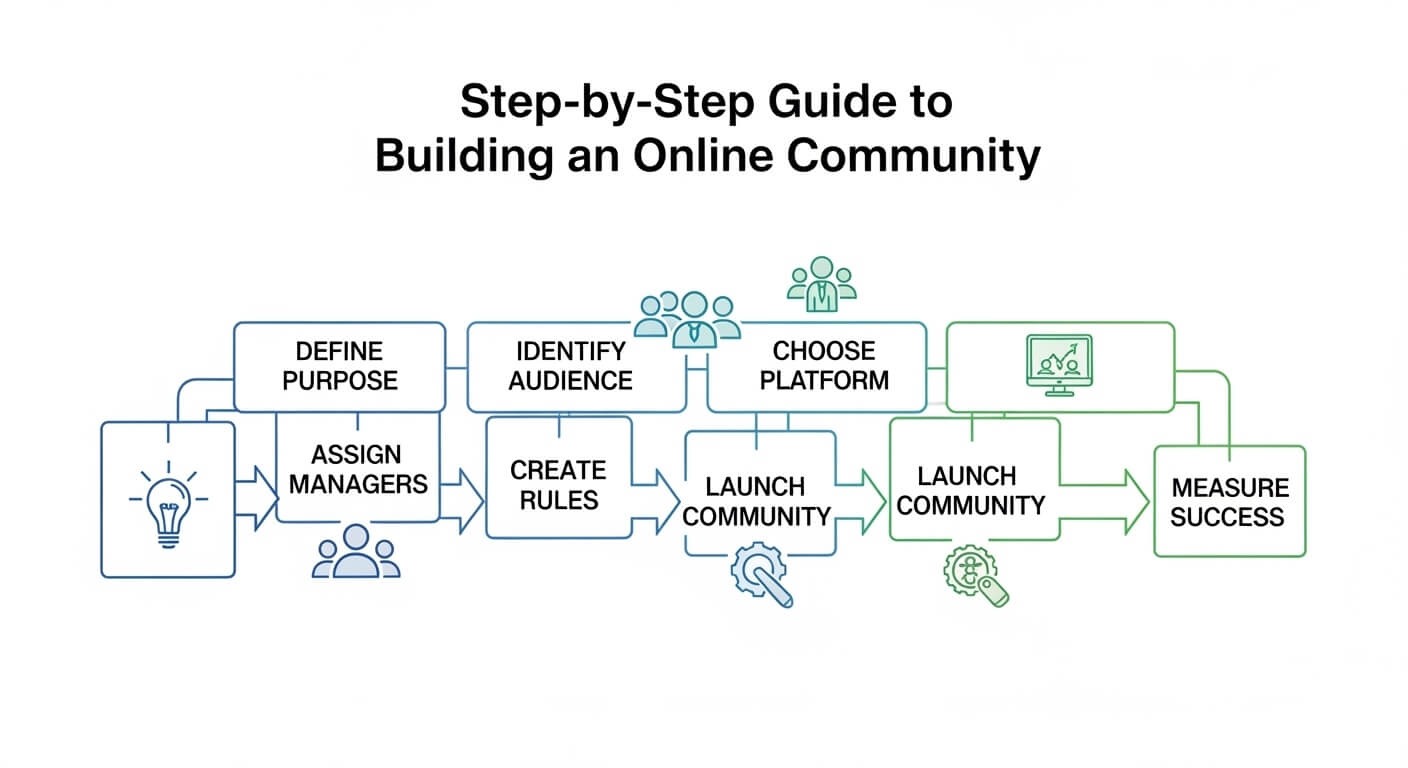
Step-by-Step Guide to Building an Online Community
Step 1: Determine the Purpose
Before you build anything, get clear on why you’re doing this. What problem will the community solve? Who is it for? What value will members receive?
Step 2: Identify Your Target Audience
Understanding your audience helps you design the right experience. Consider demographics, psychographics, and existing behaviors.
Step 3: Assign Community Managers
Communities don’t run themselves. Community managers maintain engagement, answer questions, and moderate discussions.
Step 4: Establish Guidelines
Clear rules ensure respectful conversations. Cover expected behavior, prohibited content, and consequences for rule-breaking.
Step 5: Define Success Metrics
Track active members, posts, engagement rate, and retention to measure progress.
Step 6: Choose the Right Platform
This is critical. Many businesses default to Facebook Groups, Discord, or Slack, but these come with limitations: lack of ownership, distractions, and no website integration. Platforms like ZenCommunity allow businesses to build fully branded communities directly on their WordPress website.
Step 7: Launch and Promote
Use email newsletters, website banners, social media, and onboarding flows to invite members.
Choosing the Right Platform
When selecting a community platform, consider your goals, audience preferences, and required features. But most importantly, consider ownership and control. You are at their mercy when you develop on someone else’s platform. They can change the algorithm, show ads to your members, or shut down features you rely on.
Platforms like ZenCommunity allow businesses to maintain full ownership of their audience, content, and data. Your community is yours, period.
Community Management and Best Practices
Community managers encourage discussions, resolve conflicts, welcome new members, and gather feedback. ZenCommunity includes features that make moderation easier, but human connection is what brings a community to life.
Best practices include encouraging varying levels of participation, welcoming diverse perspectives, promoting user-generated content, facilitating peer-to-peer education, and actively listening to member feedback.
Engagement Strategies
Community leaders should actively participate in discussions. Members become brand ambassadors who spread the word about your goods and services organically.
Measuring Success
Track active members, engagement rate, retention, post frequency, response time, and member growth. Look for correlations between community participation and metrics like customer lifetime value and purchase frequency.
Common Challenges and Solutions
Low Engagement
Spark conversations by asking questions and recognizing participants.
Spam
Use moderation tools and clear guidelines. Recruit trusted members as moderators as you grow.
Member Retention
Keep delivering value with fresh content and discussions.
Scaling
What works for 100 members won’t work for 1,000. Be prepared to evolve.
Future Trends
Businesses are moving toward private, owned communities. They’re building directly on their websites rather than renting space on social platforms. Communities will increasingly integrate with CRMs, marketing tools, and e-commerce platforms.
Platforms like ZenCommunity represent this shift toward owned, integrated community ecosystems.
Frequently Asked Questions
What is the purpose of an online community for a business?
To build relationships, encourage engagement, and strengthen loyalty.
What platform is best?
It depends on your needs. Social platforms offer quick setup but limited control. Tools like ZenCommunity provide full ownership and integration.
How much time does it take for a community to develop?
Several months of consistent engagement. Focus on value rather than rapid growth.
Can small businesses monetize communities?
Absolutely. Beyond direct sales, communities monetize through increased Customer Lifetime Value (CLV). Engaged members stay longer, spend more per transaction, and have a much lower “cost of acquisition” because they refer others. It’s not just about selling a course; it’s about making your entire business more profitable.
Conclusion
Online communities are becoming one of the most valuable assets for modern businesses. They allow brands to connect directly with customers, build long-term loyalty, gather valuable insights, and create sustainable growth.
While social media platforms provide temporary exposure, owned communities offer lasting value and full control over the customer experience. You’re not renting space—you’re building on your own land.
Solutions like ZenCommunity make it easier than ever for small businesses to build and manage communities directly on their own websites, transforming audiences into engaged, loyal communities that drive real business results.
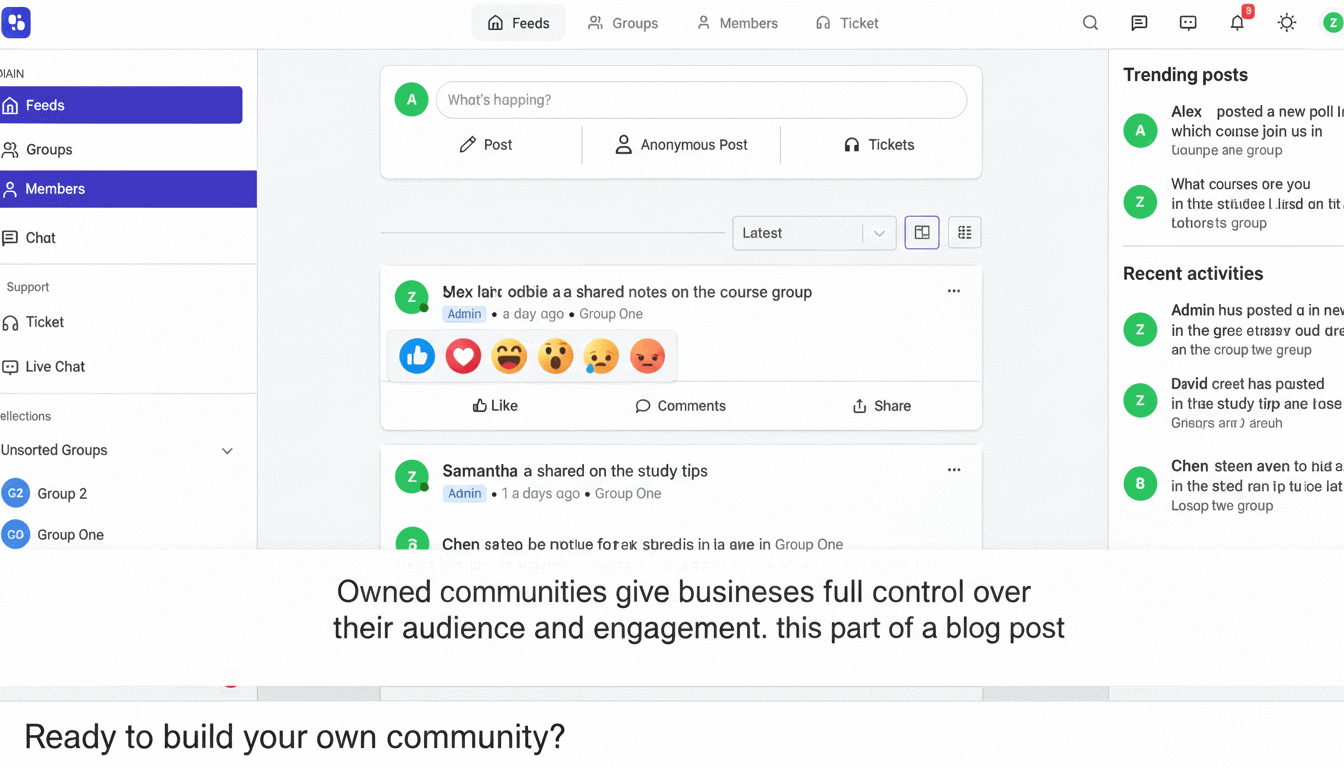
Ready to build your own community? Discover how easy it is to create an owned community directly on your WordPress website. Your audience is waiting—give them a place to call home.