


Building an online community is no longer a straightforward technical task. Expectations have shifted. People now anticipate fluid interaction, responsive interfaces, mobile-friendly design, and experiences that feel closer to social platforms than to traditional forums. Static message boards can still function, but they rarely satisfy modern users on their own.
Within the WordPress ecosystem, several community tools have matured over time. Two that are frequently compared are BuddyBoss and ZenCommunity. Both aim to support interactive communities, yet they reflect different design philosophies and technical priorities. Understanding those differences matters more than simply counting features.
Quick Scan: ZenCommunity Vs BuddyBoss Features Comparison
|
BuddyBoss |
ZenCommunity |
BuddyBoss |
|
All-in-one community system |
||
|
Built-in engagement loops |
||
|
Real-time chat included |
||
|
Private messaging system |
||
|
Group chat support |
||
|
Live notifications |
||
|
Presence indicators |
||
|
Hover profile previews |
||
|
Activity-driven retention tools |
||
|
Public & private groups |
||
|
Structured discussion feeds |
||
|
Support-style conversations |
||
|
Ticket-like discussion threads |
||
|
LMS-native engagement support |
||
|
Cohort discussion support |
||
|
Instructor–student interaction spaces |
||
|
Plugin dependency level |
||
|
Theme dependency |
||
|
Performance optimization control |
||
|
Database optimization needs |
||
|
Setup complexity |
||
|
Time to launch community |
||
|
Developer reliance |
||
|
Maintenance workload |
||
|
UX consistency across features |
||
|
Custom workflow integration |
||
|
CRM / automation compatibility |
||
|
SEO indexability of community content |
||
|
Hosting flexibility |
||
|
Scalability for large communities |
||
|
Ideal for non-technical teams |
||
|
Ownership of UX experience |
||
|
Long-term infrastructure simplicity |

What Each Platform Represents
BuddyBoss: An Established Community and Learning Framework
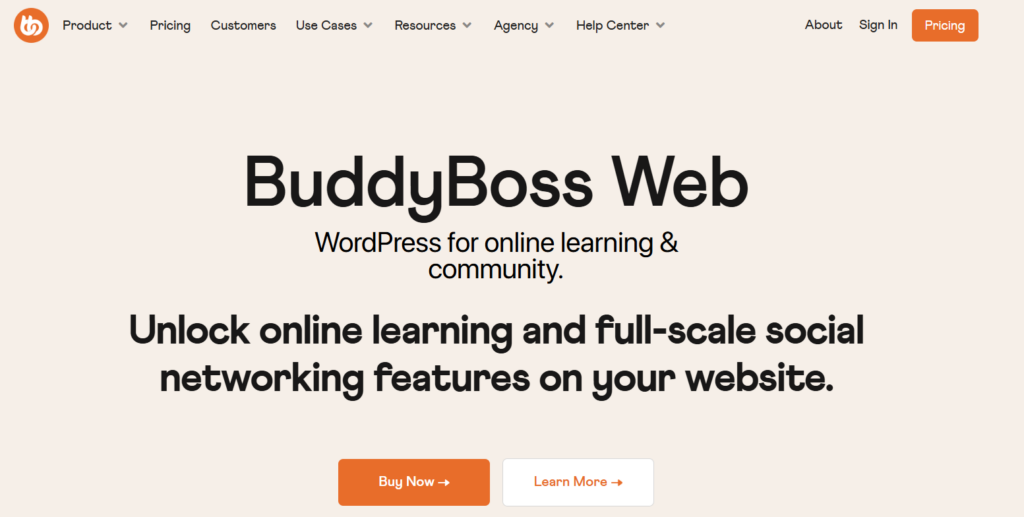
BuddyBoss has become widely known as a comprehensive WordPress-based community solution. It is often selected by businesses that want to combine membership systems, social interaction, and structured learning in one environment.
Typical capabilities include:
- Member profiles with social connections
- Activity feeds and engagement tools
- Private messaging
- Group functionality
- Event-related features
- Integration with learning management systems
- WooCommerce-based monetization options
- Optional mobile app support
Rather than functioning as a small add-on, BuddyBoss is designed as a full ecosystem that operates within WordPress. For organizations already invested in WordPress infrastructure, that continuity can feel practical and stable. It is not experimental; it has been refined through years of use.
Still, much of its interaction model follows traditional WordPress page rendering, supplemented by AJAX-based enhancements. That approach works well in many contexts, though it may not feel identical to real-time social applications.
ZenCommunity: A Real-Time Community-Oriented System
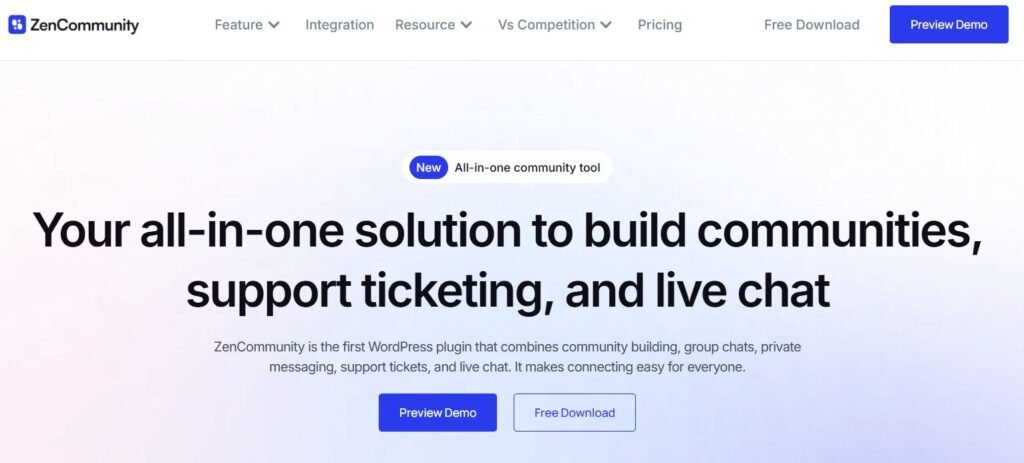
ZenCommunity takes a somewhat different path. It emphasizes live interaction and front-end responsiveness. Instead of relying primarily on page refreshes, it incorporates real-time behavior—such as instant updates and push-style notifications—into the user experience.
Core features typically include:
- Social-style activity feeds
- Group or space creation without strict limits
- Real-time chat
- Immediate notifications
- Built-in support ticket functionality
- A live chat widget for customer interaction
- Reactions, hashtags, mentions, and media sharing
In practical terms, ZenCommunity aims to consolidate communication, engagement, and support into a single environment. Where some setups require multiple plugins to cover chat, community discussion, and helpdesk workflows, ZenCommunity attempts to bring these elements together. Whether that consolidation is preferable depends on the project’s goals.
User Experience: Two Different Sensibilities
The most noticeable contrast appears in day-to-day interaction.
BuddyBoss tends to feel familiar to users accustomed to standard WordPress communities. It supports structured navigation, profiles, groups, and notifications. With appropriate configuration—particularly when paired with its recommended theme or integrations—it can provide a polished and professional interface. For many organizations, that reliability is sufficient.
ZenCommunity, by contrast, appears to prioritize immediacy. Messages and updates can surface without requiring a full page reload. Notifications behave more like those found in contemporary messaging platforms. Users who are accustomed to environments such as social networks or team communication tools may find this style more intuitive.
That said, “better” depends on expectations. Some communities value stability and structured workflows. Others depend on continuous interaction.
Social Features: Breadth Versus Emphasis
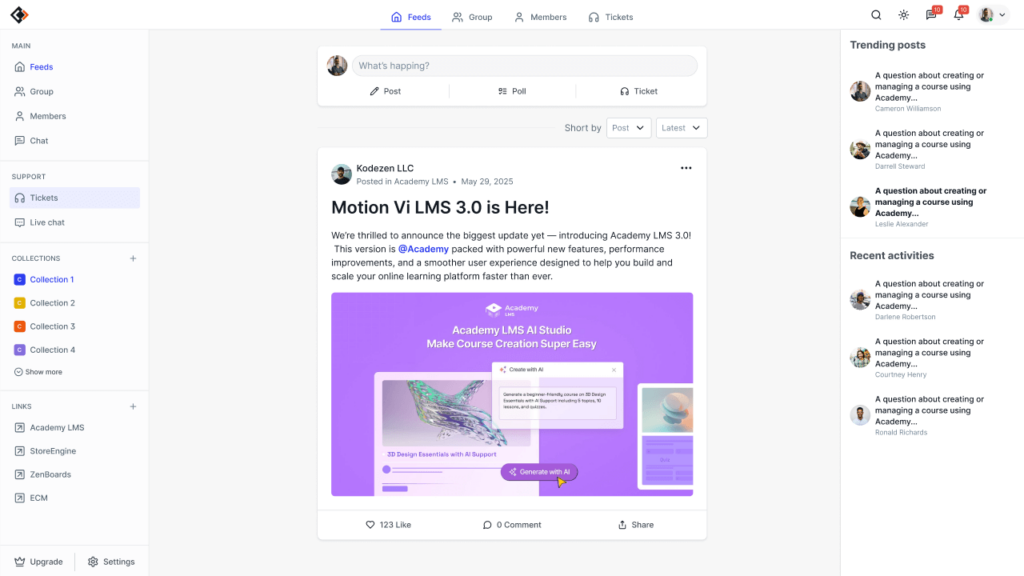
Both platforms support core community functions:
- Member directories
- Groups
- Activity posts
- Reactions and comments
- Mentions
- Direct messaging
BuddyBoss often distinguishes itself through breadth. Its feature set is wide, and it integrates with numerous WordPress tools. This can be helpful if your site already includes memberships, events, eCommerce, or learning systems.
ZenCommunity focuses more narrowly on engagement speed and integrated communication. Its real-time updates and built-in tools may reduce the need for additional plugins, though the overall ecosystem is still developing compared to more established platforms.
Neither approach is inherently superior; they simply reflect different architectural choices.
Real-Time Communication
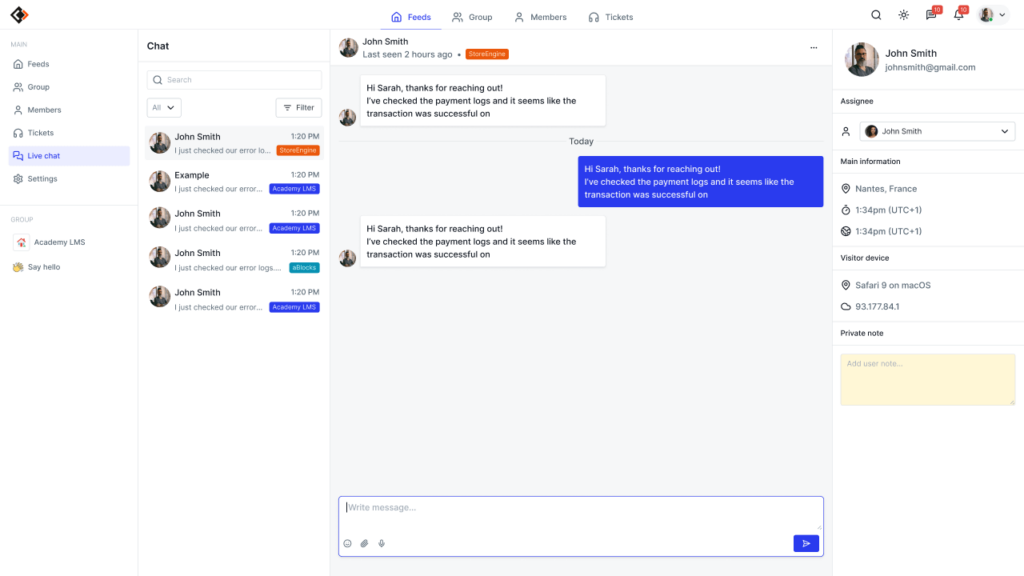
This is where the difference becomes most visible.
BuddyBoss includes private messaging and notifications, and these functions operate reliably. However, they typically rely on standard server responses and enhanced interaction layers. True instantaneous behavior may require additional configuration or complementary tools.
ZenCommunity was designed with real-time interaction as a central feature. Chat messages, notifications, and updates can appear immediately without manual refresh. For communities where responsiveness is central—such as active support hubs or fast-moving discussion groups—this capability may feel significant.
Whether that difference is decisive depends on how essential live interaction is to your audience.
Learning Management Integration
Many community platforms intersect with online education. Both tools support integration with established LMS systems, though their emphasis differs.
BuddyBoss is frequently associated with deep integration into structured learning environments, particularly when used alongside well-known LMS plugins. It can support course progression, dashboards, quizzes, and activity tracking tied to learning milestones. For institutions or course-driven businesses, that structure can be valuable.
ZenCommunity also integrates with major LMS solutions and can automatically reflect course activity within community feeds. Rather than focusing primarily on administrative dashboards, it leans toward encouraging discussion around learning progress in real time.
If your priority is formal course architecture, BuddyBoss may feel more comprehensive. If engagement around learning events matters most, ZenCommunity’s approach could be appealing.
Support Functionality
Support workflows deserve attention, especially for membership-based or product-based communities.
ZenCommunity includes built-in support ticketing and live chat capabilities. That means communities can manage assistance requests directly within the platform. In some cases, this may reduce reliance on separate helpdesk plugins.
BuddyBoss does not natively include a full support ticket system. Organizations using it typically integrate external helpdesk solutions. This is not necessarily a drawback, but it does imply additional configuration.
For projects where support interaction is central, ZenCommunity’s integrated tools may simplify the setup.
Performance Considerations
Performance depends heavily on hosting quality, caching configuration, and traffic levels.
BuddyBoss operates within traditional WordPress architecture. With proper optimization—object caching, content delivery networks, and sufficient server resources—it can perform well, even under significant load. However, large-scale engagement may require careful infrastructure planning.
ZenCommunity’s real-time features can create a different performance profile. While the interface may feel faster due to reduced page reloads, real-time systems can also place demands on server resources. Strong hosting remains important in either case.
In short, neither platform eliminates the need for thoughtful infrastructure decisions.
Ecosystem and Extensibility
BuddyBoss benefits from long-standing integration within the WordPress ecosystem. It connects with a wide range of plugins covering monetization, webinars, analytics, gamification, and more. For organizations that anticipate complex expansion, this compatibility may matter.
ZenCommunity currently emphasizes a more self-contained model. It aims to provide multiple core functions internally, which can reduce dependency on additional extensions. However, its broader third-party ecosystem is still developing.
If extensibility through external tools is a priority, BuddyBoss may offer more immediate flexibility.
Cost Structure
Pricing models differ. BuddyBoss typically operates through premium subscriptions, sometimes including optional theme and mobile app components. Depending on configuration, total cost can increase with add-ons.
ZenCommunity provides a free core version, with premium features available in higher tiers. If its built-in tools satisfy your requirements, overall expenditure may remain comparatively lower.
The real comparison depends less on sticker price and more on how many additional plugins each setup would require.
Pricing Comparison — ZenCommunity vs BuddyBoss
Price isn’t just about the license fee.
It’s about the total cost of running your community long term.
Here’s how the platforms compare.
Platform Pricing Overview
|
Pricing Factor |
ZenCommunity |
BuddyBoss |
|
Entry yearly pricing |
||
|
Lifetime option available |
||
|
Requires theme purchase |
||
|
Requires extra integrations for LMS |
||
|
Developer cost risk |
||
|
Infrastructure tuning cost |
||
|
Maintenance overhead |
||
|
Predictable long-term cost |
||
|
Plugin stack expansion cost |
||
|
Total ownership value |
Choosing Between Them
BuddyBoss may be appropriate if you:
- Need strong LMS integration
- Require broad compatibility with WordPress tools
- Plan structured monetization
- Value a mature ecosystem
ZenCommunity may be suitable if you:
- Prioritize real-time interaction
- Want integrated chat and support features
- Prefer a more app-like experience
- Aim to minimize reliance on additional plugin
The decision is less about superiority and more about alignment with your objectives.
Concluding Perspective
There is no universal answer. BuddyBoss reflects a well-established, broadly integrated community framework within WordPress. ZenCommunity emphasizes immediacy, integrated communication, and support-oriented functionality.
In 2026, users increasingly expect responsive, interactive platforms. Yet not every project requires the same level of real-time complexity. Before deciding, it may help to clarify your priorities: structured learning and ecosystem depth, or live engagement and consolidated support.
The most appropriate choice will depend on the community you intend to build, not simply on feature comparisons.